Choosing the right insulation material is one of the most impactful decisions an Irvine homeowner can make. Irvine sits in California Climate Zone 8, where summer temperatures regularly climb into the 90s°F, coastal marine air brings mild humidity, and attic temperatures can exceed 150°F during peak heat waves. While hard freezes are rare, the daily temperature swings between morning marine layer and afternoon heat stress building envelopes in ways that generic insulation advice simply doesn’t address.
R-value measures thermal resistance — the higher the R-value, the more effectively a material resists heat flow. For Irvine homes, selecting the correct R-value isn’t just about comfort; it directly determines your energy bills, HVAC lifespan, and compliance with California’s Title 24 energy code.
Read moreShow less
This guide covers every major insulation material available to Irvine homeowners — from spray foam to fiberglass batts — explaining R-values, climate-specific performance, ideal applications, and realistic installed costs so you can make a fully informed decision.
Understanding Insulation Types for Irvine Homes
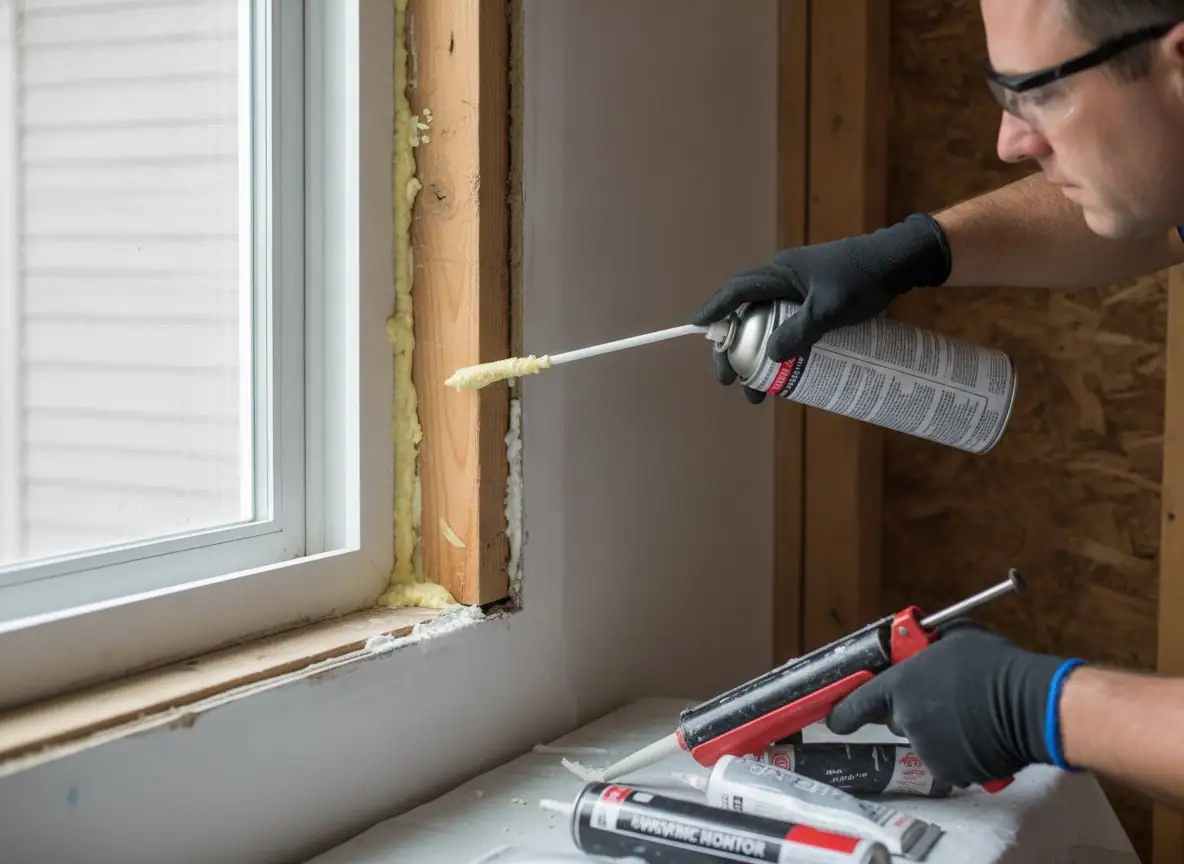
Irvine homeowners have access to a broad range of insulation materials, each engineered with different performance characteristics. The six primary categories — spray foam, blown-in loose-fill, fiberglass batt, mineral wool, cellulose, and rigid foam board — differ in R-value per inch, moisture resistance, air-sealing capability, fire performance, and installation complexity.
Irvine falls under California’s Title 24 Building Energy Efficiency Standards, which mandate specific R-value minimums for new construction and major renovations. Climate Zone 8 requirements typically call for R-38 or greater in attics and R-13 to R-21 in walls, though older homes built before the 1980s frequently fall well short of these benchmarks.
Irvine’s housing stock is diverse — from 1970s tract homes in University Park to newer construction in Portola Springs and Great Park Neighborhoods. Older homes often have 2×4 wall framing, limiting cavity depth and the R-values achievable with batt insulation alone. Newer builds may use 2×6 framing, opening the door to higher-performing materials.
Coastal proximity adds a moisture consideration: marine air intrusion can degrade certain insulation materials over time if vapor management isn’t addressed. Irvine also borders wildland areas, making fire-resistance ratings an important secondary factor when evaluating materials like mineral wool or intumescent spray foam. Understanding these overlapping local factors is essential before selecting any material.
How Irvine’s Climate Affects Your Insulation Material Choice
Irvine’s climate creates a specific set of demands that should guide every material selection decision. Summer attic temperatures regularly exceed 140°F to 150°F, making high-R-value, heat-reflective assemblies a priority. A poorly insulated attic forces air conditioners to work 20–30% harder, driving energy costs up significantly during peak June through September billing periods.
Coastal marine air means Irvine sees moderate relative humidity — typically 60–75% in mornings — before afternoon dry heat takes over. This cycling stresses vapor-permeable insulation materials. Closed-cell spray foam and rigid foam board handle this moisture cycling best. Fiberglass batts, if improperly installed without proper vapor management, can trap moisture against sheathing over time.
Read moreShow less
Irvine’s proximity to wildland areas in the Irvine Open Space Preserve and Santiago Canyon increases wildfire smoke and ember risk. For attics and exterior applications near these zones, fire-resistant mineral wool or intumescent-coated spray foam products are worth the added investment.
For existing homes, dense-pack cellulose or blown-in fiberglass in attics is typically the most cost-effective path to reaching R-38. For walls, retrofit options include dense-pack cellulose or open-cell spray foam injected through small holes. New construction allows for greater design flexibility — polyiso continuous insulation over 2×6 framing can achieve superior performance. Crawl spaces benefit most from closed-cell spray foam or rigid foam board to resist ground moisture and air intrusion.
Free, no-obligation estimates
Talk to Home Energy Saver Insulation
Tell us what you need and we’ll take it from there.
Insulation Materials Available in Irvine, CA
Spray Foam Insulation
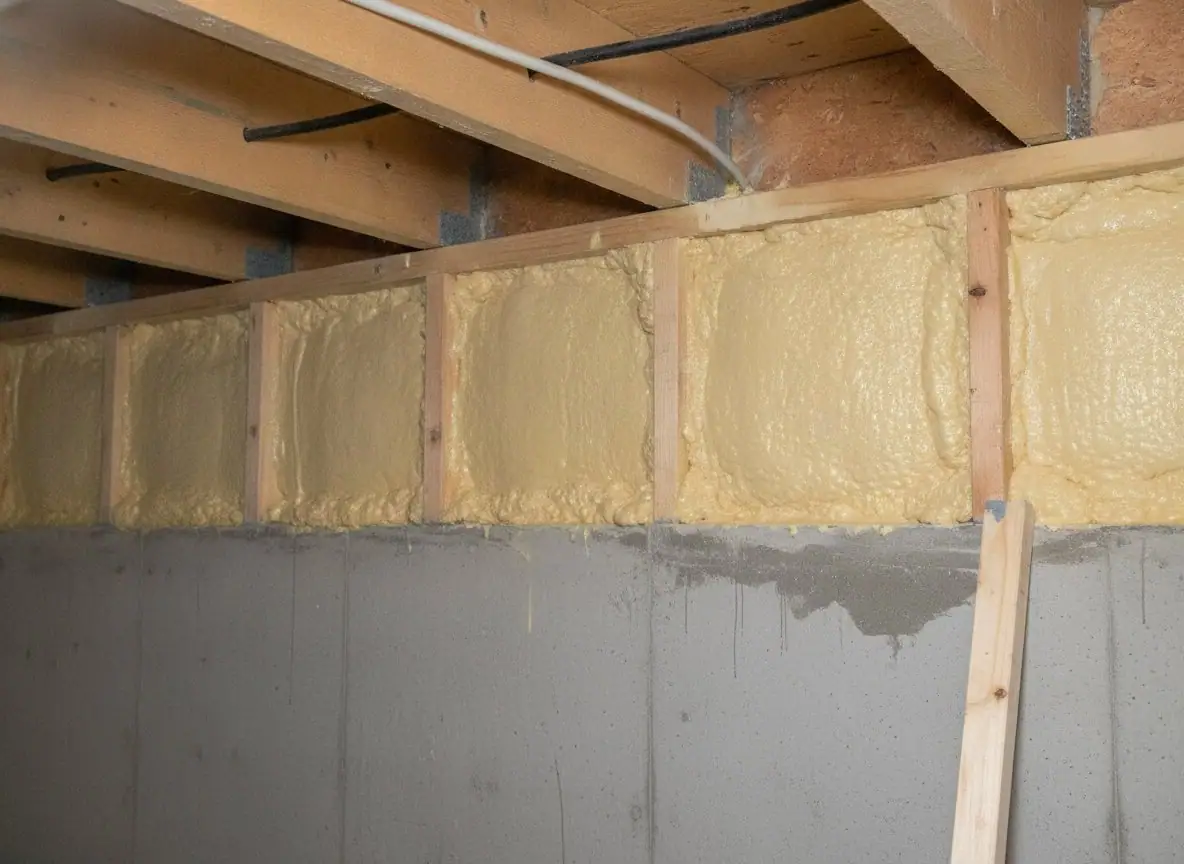
Spray polyurethane foam (SPF) comes in two forms: open-cell (R-3.5 to R-3.7 per inch) and closed-cell (R-6 to R-7 per inch). Closed-cell spray foam is especially well-suited for Irvine’s climate because it simultaneously air-seals and insulates, preventing the hot, dry Santa Ana wind-driven air infiltration that undermines other materials. It also resists moisture from coastal humidity. The primary drawback is cost. Open-cell foam is vapor-permeable and better for interior walls. Best applications include attic rafters, rim joists, and wall cavities in existing homes. Closed-cell also adds structural rigidity. Approximate installed cost: open-cell $1.00–$1.50 per board foot; closed-cell $1.75–$3.00 per board foot.
Learn moreBlown-In (Loose-Fill) Insulation
Loose-fill insulation — typically fiberglass or cellulose — is blown pneumatically into attic floors and enclosed wall cavities. R-values range from R-2.2 to R-3.8 per inch depending on the material. For Irvine attics, blown-in is a highly cost-effective way to reach Title 24’s R-38 requirement in a single installation session. It conforms around obstructions like pipes and wiring, reducing gaps that defeat batt insulation. The main limitation is that loose-fill alone does not air-seal, so it works best combined with attic air-sealing as a preliminary step. It can settle slightly over time. Ideal for existing attics and enclosed walls. Approximate installed cost: $1.00–$2.00 per square foot.
Fiberglass Batt Insulation
Fiberglass batts are the most widely recognized insulation product in American homes, with R-values ranging from R-11 to R-38 depending on thickness. They are relatively affordable and easy to install between standard stud and joist cavities. In Irvine’s mild-humidity environment, fiberglass performs reasonably well, but it is highly susceptible to air infiltration — meaning any gaps, compressions, or miscuts significantly reduce real-world performance below the labeled R-value. Batts work well in open wall and floor assemblies during new construction or renovation but are less effective as attic top-ups. Not recommended for enclosed existing wall cavities. Approximate installed cost: $0.50–$1.50 per square foot.
Mineral Wool / Rockwool Insulation
Mineral wool, sold under brands like Rockwool and Thermafiber, is manufactured from volcanic rock or industrial slag. It provides R-3.0 to R-3.3 per inch, is naturally fire-resistant (rated to over 2,000°F), water-repellent, and dimensionally stable. For Irvine homeowners near wildland-urban interface areas — particularly along the eastern foothills — mineral wool’s fire resistance is a meaningful safety advantage. It also provides superior soundproofing compared to fiberglass, making it popular in interior partition walls. Mineral wool is denser and slightly more expensive than standard fiberglass but holds its shape better over time. Best applications: exterior walls, attic kneewall assemblies, and fire-risk areas. Approximate installed cost: $1.00–$2.00 per square foot.
Cellulose Insulation
Cellulose is made from 80–85% recycled paper fiber treated with borate fire retardants. It achieves R-3.2 to R-3.8 per inch and is one of the most environmentally sustainable insulation choices available. Cellulose performs exceptionally well in Irvine attics — its density reduces air movement within the insulation layer and it can be dense-pack blown into existing wall cavities without demolition. Borate treatment also provides a degree of pest resistance, valuable in Southern California. The material is sensitive to sustained moisture; however, Irvine’s low rainfall and dry summers make this less of a concern than in wetter climates. Ideal for attic floors and retrofit walls. Approximate installed cost: $1.00–$1.75 per square foot.
Foam Board (Rigid) Insulation
Rigid foam panels — including EPS (expanded polystyrene, R-3.6/inch), XPS (extruded polystyrene, R-5/inch), and polyisocyanurate (R-6 to R-6.5/inch) — are used where cavity space is limited or continuous insulation is required by code. In Irvine, polyiso foam board is often applied to exterior walls and under roof sheathing in new construction to meet Title 24 continuous insulation requirements. Foam board also works well in crawl spaces and as interior basement wall sheathing. It does not air-seal on its own; seams must be taped or sealed. Some XPS products have high global warming potential. Best for walls, roofs, and below-grade applications. Approximate installed cost: $1.25–$3.00 per square foot installed.
Why Irvine Homeowners Trust Home Energy Saver Insulation for Insulation
Home Energy Saver Insulation has helped Irvine homeowners navigate insulation decisions across every material type and housing style in Orange County. Here’s why local homeowners rely on our team:
Expertise Across All Insulation Types:
Expertise Across All Insulation Types:Our crews are trained and experienced with spray foam, blown-in, batts, mineral wool, cellulose, and rigid foam — we recommend the right material, not just the one we prefer to install.
Licensed and Insured:
Licensed and Insured:We carry full California contractor licensing and liability insurance, protecting your home and investment throughout every project.
Manufacturer-Certified Installers:
Manufacturer-Certified Installers:Our technicians hold manufacturer certifications for the products we install, ensuring warranty validity and installation quality.
Free Insulation Assessment:
Free Insulation Assessment:We offer no-obligation on-site evaluations to identify where your home is losing energy and which materials will deliver the best return.
Warranty Coverage:
Warranty Coverage:Every installation is backed by both product manufacturer warranties and our own workmanship guarantee.
Local Code and Rebate Knowledge:
Local Code and Rebate Knowledge:We understand California Title 24 requirements and actively help homeowners access Southern California Edison, SoCalGas, and federal tax credit programs to reduce out-of-pocket costs.
FAQ
Insulation Materials FAQ for Irvine Homeowners
What is the best insulation type for Irvine’s climate?
There is no single “best” material — it depends on location within the home, budget, and whether the project is new construction or a retrofit. For Irvine attics, blown-in cellulose or fiberglass to R-38 or higher is the most cost-effective choice. For air-sealing-critical areas like rim joists and attic bypasses, closed-cell spray foam excels. For walls in fire-risk zones, mineral wool offers both performance and safety. A professional assessment will identify the right combination for your specific home.
What R-value do I need for my Irvine home?
California’s Title 24 energy code for Climate Zone 8 generally requires R-38 minimum in attics, R-13 to R-21 in wall cavities, and R-19 in floors over unconditioned spaces. Older Irvine homes built in the 1970s and 1980s often have only R-11 to R-19 in attics — well below current standards. Upgrading to the minimum code requirement typically delivers the highest return on investment in energy savings.
How do insulation material costs compare in Irvine?
As a general guide, fiberglass batts are the least expensive at roughly $0.50–$1.50 per square foot installed. Blown-in cellulose and fiberglass run $1.00–$2.00. Mineral wool batts range from $1.00–$2.00. Rigid foam board costs $1.25–$3.00 depending on type and thickness. Open-cell spray foam runs $1.00–$1.50 per board foot, while closed-cell spray foam is the premium option at $1.75–$3.00 per board foot. Higher upfront costs often deliver lower long-term energy costs and fewer comfort complaints.
Is attic insulation different from wall insulation?
Yes — significantly. Attic insulation is typically installed horizontally on the attic floor and can be piled thick to achieve high R-values affordably using blown-in methods. Wall insulation is constrained by stud-cavity depth — usually 3.5 inches (2×4 framing) or 5.5 inches (2×6 framing) — limiting achievable R-values with batts. Wall retrofits often require specialized techniques like dense-pack cellulose blown through small holes to avoid drywall removal. Attic upgrades typically deliver faster payback than wall upgrades for Irvine homes.
How much can I save on energy bills with better insulation in Irvine?
The U.S. Department of Energy estimates that proper insulation and air sealing can reduce heating and cooling costs by 15–20% or more. In Irvine, where cooling dominates energy use, attic insulation upgrades from R-11 to R-38 have been shown to reduce cooling loads substantially. Actual savings depend on your current insulation level, HVAC efficiency, home size, and usage habits. Most Irvine homeowners see payback periods of 3 to 7 years on attic insulation upgrades.
Are there rebates or tax credits available for insulation in California?
Yes. California homeowners may access multiple incentive programs. Southern California Edison and SoCalGas offer rebates through their Energy Upgrade California programs for qualifying insulation improvements. Federally, the Inflation Reduction Act’s Energy Efficient Home Improvement Credit (25C) allows homeowners to claim up to 30% of insulation project costs (up to $1,200 per year) on their federal tax return. Income-qualified households may also be eligible for the HOMES Rebate program. Availability and amounts change periodically, so consulting with a licensed insulation contractor familiar with current programs is the best way to maximize savings.
Does insulation help with wildfire smoke and air quality in Irvine?
Insulation alone does not filter air, but a well-sealed and properly insulated home significantly reduces the volume of outside air — including smoke-laden air — that infiltrates the living space. Spray foam insulation in particular provides continuous air barrier performance that reduces smoke infiltration during wildfire events. Combining insulation improvements with HVAC filtration upgrades provides the most comprehensive indoor air quality protection for Irvine homes near wildland areas.
Get a Free Insulation Assessment in Irvine
Not sure which insulation material is right for your Irvine home? Home Energy Saver Insulation offers a complimentary, no-obligation insulation assessment to help you understand your current insulation levels, identify energy loss areas, and determine which materials and R-values make the most sense for your budget and Irvine’s unique climate demands.
Our licensed and insured team serves all Irvine neighborhoods — from Woodbridge to Quail Hill to Portola Springs. We’ll walk you through available materials, realistic costs, and any rebate or tax credit programs you may qualify for.
Call us today at 949-710-2596 to schedule your free assessment and start making smarter, more comfortable, and more energy-efficient decisions for your home.
Why choose us
Why choose Home Energy Saver Insulation?
Free estimates
Get a clear, no-obligation estimate before any work begins.
Licensed & insured
Your property and our crew are protected on every project.
Residential & commercial
One team for homes, multi-family and commercial properties.
Locally owned & operated
A local team serving your community and the surrounding area.
Get in touch
Find insulation help near you
Request a free estimate online or give us a call — our team will follow up quickly.
- Call us(949) 710-2596
- Visit22 Thomas, Irvine, CA 92618
- HoursMon-Sun 07:00-19:00