
Spray foam insulation is one of the most advanced and energy-efficient insulation solutions available for residential and commercial properties. At Home Energy Saver Insulation, we specialize in delivering professional spray foam insulation in Irvine, CA, helping homeowners and business owners reduce energy costs, improve indoor comfort, and protect their structures from moisture intrusion.
Irvine’s unique Mediterranean climate — characterized by warm, dry summers, mild winters, and periodic Santa Ana wind events — creates specific insulation demands that generic solutions simply cannot address. With the city’s rapid residential growth, master-planned communities, and mix of newer tract homes and aging commercial buildings, spray foam insulation offers a versatile, high-performance answer to Irvine’s energy efficiency challenges.
Read moreShow less
Our team brings deep local knowledge and technical expertise to every project. Whether you’re insulating a new construction home in Portola Springs or retrofitting an older property in University Park, Home Energy Saver Insulation delivers results that make a measurable difference. Call us today at 949-710-2596 to schedule your free assessment.
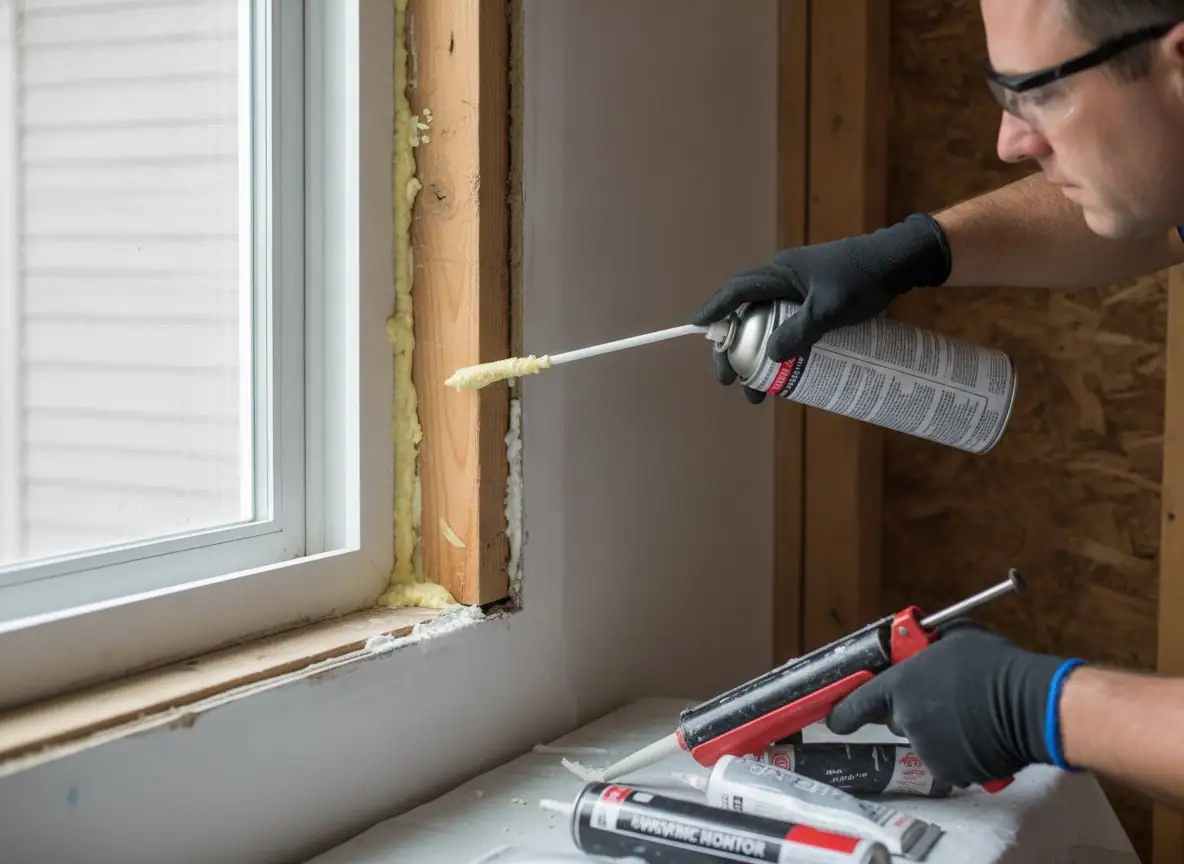
Understanding Spray Foam Insulation
Spray foam insulation is a two-component polyurethane material that combines isocyanate and polyol resin at the point of application. When these two substances meet, they react chemically, expanding rapidly to fill cavities, gaps, cracks, and irregular surfaces. This expansion — which can be 30 to 60 times the liquid volume — creates a seamless air barrier that traditional insulation materials like fiberglass batts or blown-in cellulose simply cannot replicate.
The technology behind spray polyurethane foam (SPF) has been in use since the 1940s, originally developed for aircraft applications before transitioning into the construction industry during the 1970s. By the 1990s, it had become a mainstream insulation choice in high-performance building circles. Today, spray foam is widely used in residential attics, crawl spaces, rim joists, walls, and commercial roofing systems.
Read moreShow less
There are two primary types of spray foam: open-cell and closed-cell. Open-cell spray foam has a softer, spongy texture with an R-value of approximately R-3.5 to R-3.8 per inch. It is vapor-permeable and excellent for interior walls and attic undersides where moisture vapor management is desired. Closed-cell spray foam, by contrast, is dense and rigid with an R-value of approximately R-6 to R-7 per inch. It acts as both an air barrier and a vapor retarder, making it ideal for exterior applications, crawl spaces, and areas exposed to moisture.
In Irvine, where the California Energy Commission mandates compliance with Title 24 energy codes for all new construction and major renovations, spray foam insulation is increasingly specified by builders and architects. The city’s predominantly stucco-clad, wood-framed homes — many built between the 1970s and 2000s — benefit enormously from the air-sealing properties of spray foam, which address the natural settling and shrinkage that occurs in older wood framing. Newer communities such as Eastwood and Beacon Park feature tighter construction standards, and spray foam helps these homes maintain their certified energy performance levels over time.
Beyond energy performance, spray foam contributes to improved indoor air quality by reducing infiltration of outdoor allergens, dust, and wildfire smoke particulates — a growing concern across all of Orange County.
Why Spray Foam Insulation Is Needed in Irvine, CA
Santa Ana Wind Events and Thermal Stress
One of Irvine’s most defining climate factors is the Santa Ana wind pattern. These offshore, hot, dry winds — which typically arrive between October and February — can push temperatures above 90°F even in mid-November, while simultaneously dropping relative humidity to below 10 percent. During major Santa Ana events, such as the October 2007 Southern California wildfires and the December 2017 Thomas Fire period, Irvine recorded sustained wind gusts exceeding 50 mph. These rapid thermal shifts create enormous stress on building envelopes. Homes with inadequate insulation experience dramatic temperature swings as the conditioned interior air is exchanged with hot, dry exterior air infiltrating through gaps and cracks. Spray foam’s superior air-sealing capability — achieving air leakage rates below 0.25 CFM50 per square foot of enclosure — significantly reduces this infiltration effect.
Summer Heat Loads and Title 24 Compliance
Irvine’s inland neighborhoods such as Northwood, Woodbury, and Stonegate regularly record summer high temperatures between 95°F and 105°F, substantially higher than the coastal average. In these areas, attic temperatures can exceed 150°F on peak summer days, placing enormous loads on HVAC systems. The California Energy Commission’s Title 24 Part 6 standards require minimum ceiling insulation values of R-38 in Climate Zone 8 (which covers most of Irvine), but simply meeting minimum code values with traditional insulation does not account for air leakage. Spray foam applied at the roofline creates a conditioned attic space that can reduce peak attic temperatures by 30°F to 40°F compared to a vented attic with fiberglass batts.
Coastal Moisture Intrusion
While Irvine is not directly on the coast, the marine layer influence from the Pacific Ocean regularly pushes moisture-laden air inland during the late spring and summer months — a phenomenon locals call “June Gloom.” This morning marine layer can maintain elevated humidity levels in crawl spaces and lower wall cavities, particularly in older Ranch-era homes built in University Park and El Camino Real during the 1970s. Without a proper vapor retarder, this cyclic moisture exposure leads to wood rot, mold proliferation, and compromised fiberglass insulation. Closed-cell spray foam in these areas acts as an integrated vapor barrier, maintaining structural integrity and indoor air quality.
Irvine’s Aging Housing Stock
A significant portion of Irvine’s residential inventory — particularly the 1970s and 1980s homes in communities like Turtle Rock, Rancho San Joaquin, and Woodbridge — was built before modern energy codes and features minimal wall insulation and poorly sealed attic bypasses. These homes average air leakage rates of 8 to 12 ACH50 (air changes per hour at 50 Pascals), compared to the 3 ACH50 target recommended under modern California standards. Spray foam retrofit applications in these communities can reduce air leakage by 60 to 80 percent, resulting in verifiable energy savings of 20 to 40 percent on annual HVAC costs.
Free, no-obligation estimates
Talk to Home Energy Saver Insulation
Tell us what you need and we’ll take it from there.
Signs You Need Spray Foam Insulation in Irvine
Energy Performance Indicators
- Monthly electricity bills exceeding $200 to $300 during Irvine’s summer months (June through September), even with a properly maintained HVAC system
- HVAC system running continuously during Santa Ana wind events without maintaining the thermostat setpoint
- Noticeable drafts near electrical outlets, window frames, or recessed lighting fixtures, especially in homes built before 1990
- Inconsistent room temperatures — more than 5°F variance between rooms on the same floor
Structural and Moisture Warning Signs
- Visible moisture staining or efflorescence on interior wall surfaces, particularly in lower-floor rooms of hillside homes in Turtle Ridge or Quail Hill
- Musty odors emanating from crawl spaces or lower-level storage areas following winter rainfall events
- Visible gaps or sagging in existing batt insulation observed in attic spaces
- Evidence of pest entry — rodent droppings, insect debris, or compromised vapor barriers in crawl spaces
Comfort and Indoor Air Quality Concerns
- Increased dust or particulate accumulation on surfaces, indicating high air infiltration rates
- Allergy or respiratory symptom flare-ups that correspond to Santa Ana wind events or wildfire smoke episodes
- Condensation forming on interior window surfaces during winter mornings, indicating poor thermal envelope performance
Urgency note: If you observe active moisture intrusion or mold growth alongside insulation failure, treat this as an urgent remediation situation. Contact us immediately at 949-710-2596.
Our process
Our Spray Foam Insulation Process in Irvine
- 01
Initial Assessment and Energy Audit (Day 1 — 1 to 2 Hours)
Our process begins with a comprehensive on-site evaluation of your Irvine property. We examine the existing insulation condition, assess air leakage points using a blower door test, inspect attic and crawl space conditions, and review your utility billing hist
- 02
Customized Scope of Work and Proposal (Days 1 to 3)
Based on our findings, we develop a detailed project scope specifying foam type (open-cell or closed-cell), application locations, target R-values, and projected energy savings. We provide a transparent, itemized written proposal with no hidden fees.
- 03
Pre-Installation Preparation (Installation Day, Morning)
Before application begins, our crew removes any existing compromised insulation (learn about our insulation removal service), seals major penetrations, and protects surfaces not receiving foam with masking and sheeting. All HVAC registers are sealed to prevent
- 04
Spray Foam Application (Installation Day, 2 to 6 Hours Depending on Scope)
Our certified applicators apply spray foam using calibrated proportioner equipment set to maintain precise mix ratios and substrate temperatures. In Irvine’s warmer months, substrate temperatures are monitored carefully — surfaces exceeding 120°F require cooli
- 05
Curing and Quality Inspection (Same Day, 1 to 2 Hours After Application)
Spray foam achieves tack-free cure within 30 to 60 seconds of application and full mechanical cure within 24 hours. Our team inspects all application zones for coverage consistency, correct thickness (verified with a depth probe), and proper adhesion.
- 06
Air Quality Clearance and Re-Occupancy (24 Hours Post-Application)
We provide clear re-occupancy guidance. Properly cured spray foam is inert and safe; however, we recommend ventilating the application area for a minimum of 24 hours post-installation as a precaution, consistent with California OSHA guidelines.
- 07
Post-Installation Follow-Up
Within two weeks of project completion, we follow up to confirm your comfort improvement and answer any questions. For larger projects, we offer a post-installation blower door test to document the achieved air leakage reduction.
Spray Foam Insulation Methods and Approaches
Closed-Cell Spray Foam (2-lb Density)
Closed-cell spray foam is our primary recommendation for Irvine crawl spaces, exterior rim joists, and roofline applications in hillside communities like Shady Canyon and Turtle Ridge where moisture exposure is elevated. With an R-value of R-6.5 per inch, a 3-inch application achieves R-19.5, meeting or exceeding Title 24 requirements in a fraction of the cavity depth required by fiberglass batts. Its rigidity also adds structural racking strength to wall assemblies.
Open-Cell Spray Foam (0.5-lb Density)
Open-cell spray foam is cost-effective for interior applications such as attic undersides, interior wall cavities, and soundproofing between living spaces. At R-3.7 per inch, a 5.5-inch application in a standard 2×6 wall cavity achieves approximately R-20. Its vapor permeability makes it suitable for Irvine’s mixed-humid conditions in areas where vapor-open assemblies are preferred by building scientists.
Flash-and-Batt Hybrid Application
In older Irvine homes where budget constraints exist, we often recommend a hybrid approach: a 1- to 2-inch flash coat of closed-cell foam applied to the cavity face (providing air sealing and vapor control), followed by a fiberglass or mineral wool batt to fill the remaining cavity depth. This method balances performance and cost effectively. learn more about our fiberglass insulation services
Roofline (Unvented Attic) Application
For Irvine’s tract homes with complex rooflines, recessed lighting, and HVAC equipment located in the attic, converting to an unvented conditioned attic assembly using spray foam at the roof deck is often the highest-ROI upgrade available. This approach brings the attic within the conditioned building envelope, reducing HVAC duct losses by up to 30 percent.
Spray Foam Insulation Cost in Irvine, CA
Understanding the investment involved helps Irvine homeowners make informed decisions. Here is a transparent breakdown of typical spray foam insulation costs in the Irvine market:
Open-Cell Spray Foam
- Material and labor cost: $1.00 to $1.50 per board foot (one square foot at one inch thickness)
- Typical attic underside application (1,500 sq ft at 5 inches): $7,500 to $11,250
- Interior wall retrofit (per 1,000 sq ft of wall area): $3,000 to $5,000
Closed-Cell Spray Foam
- Material and labor cost: $2.00 to $3.00 per board foot
- Crawl space encapsulation (800 sq ft at 2 inches): $3,200 to $4,800
- Roofline application (1,500 sq ft at 3 inches): $9,000 to $13,500
Irvine-Specific Cost Factors
Several factors influence final pricing in the Irvine market. Orange County labor rates are higher than the national average, reflecting the local cost of living. Access complexity in hillside communities such as Turtle Ridge and Quail Hill may add 10 to 15 percent to project costs. Homes requiring pre-installation insulation removal (view insulation removal pricing) add $1.00 to $2.00 per square foot to overall project costs. California’s CARB-compliant low-VOC foam formulations, required for air quality compliance in the South Coast Air Quality Management District (SCAQMD), may carry a slight material premium over standard formulations.
Read moreShow less
Most Irvine homeowners investing in spray foam insulation recover their investment within 3 to 7 years through energy savings, with many seeing immediate reductions of $80 to $150 per month on summer electricity bills. Call 949-710-2596 for a detailed written quote.
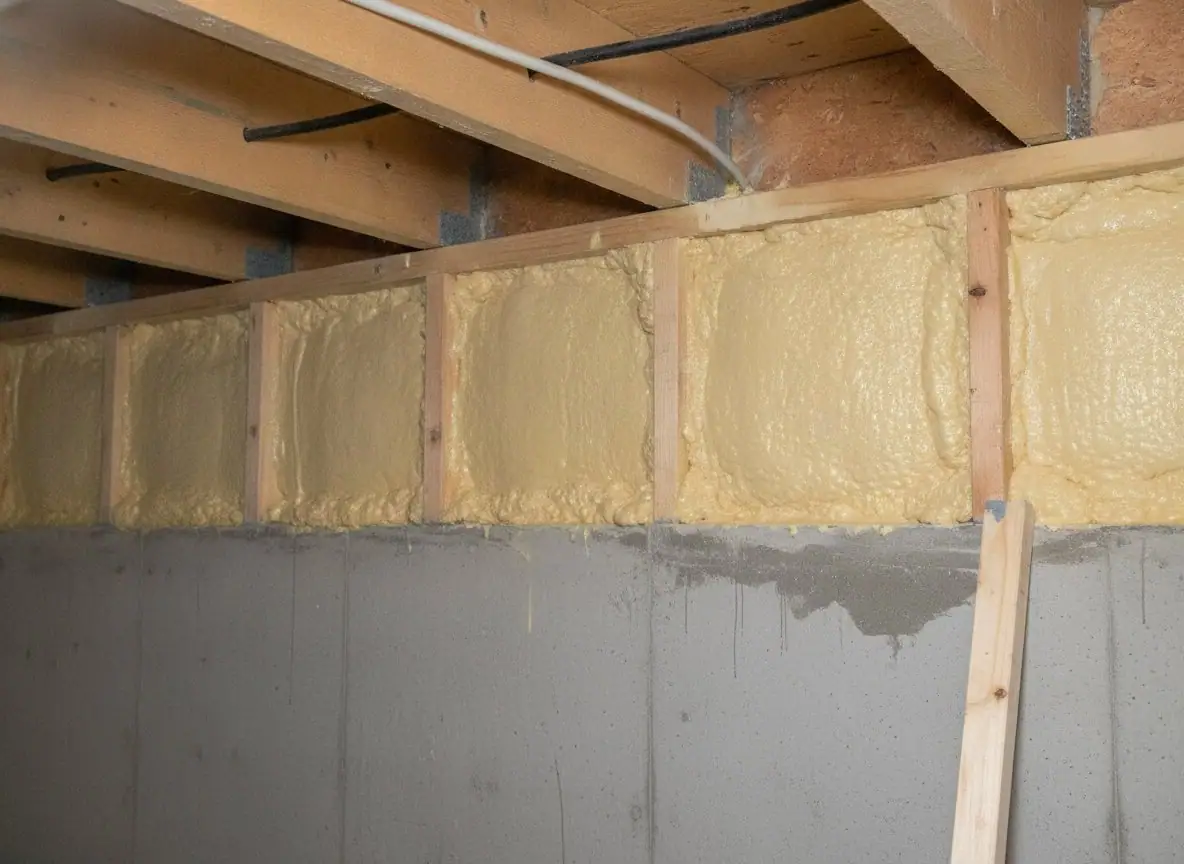
Spray Foam Insulation Services Across Irvine Neighborhoods
Woodbridge and University Park (Built 1970s–1980s)
These established Irvine communities feature single-family homes with original 1970s construction standards and minimal wall insulation. Woodbridge’s lakeside properties face additional moisture exposure from proximity to the North and South Lakes. We frequently perform full attic spray foam retrofits and crawl space encapsulation in these neighborhoods. learn about our attic insulation services
Turtle Rock and Rancho San Joaquin (Built 1970s–1990s)
Hillside terrain in Turtle Rock creates variable wind exposure and wider temperature swings than valley-floor communities. Homes here benefit significantly from closed-cell foam at the roofline and exterior wall assemblies.
Northwood and Stonegate (Built 1990s–2010s)
These inland communities record Irvine’s highest summer temperatures. Homeowners frequently report HVAC systems struggling to maintain comfort during peak heat events. Open-cell attic underside applications are a popular and cost-effective upgrade in these neighborhoods.
Portola Springs and Beacon Park (Built 2010s–Present)
Newer master-planned communities with tighter construction benefit from spray foam to maintain their certified energy performance and support solar panel system efficiency by reducing overall HVAC demand.
Spray Foam Insulation Maintenance Tips for Irvine Homeowners
- Annual visual inspection: Inspect accessible spray foam surfaces in your attic and crawl space each fall before Santa Ana season begins. Look for physical damage, pest intrusion marks, or separation from substrate surfaces.
- UV protection for exposed foam: If any spray foam is exposed to sunlight — common in open carport or patio cover applications — ensure a protective coating or paint is maintained, as UV radiation degrades foam surface integrity over time. Irvine’s approximately 280 sunny days per year accelerates this process.
- Monitor crawl space humidity: After Irvine’s winter rain season (December through March), check crawl space humidity levels. Target below 60 percent relative humidity. learn about crawl space insulation options
- Maintain HVAC system filters: A well-insulated home in Irvine circulates air more efficiently; ensure HVAC filters are replaced every 30 to 60 days during Santa Ana season when particulate loads are high.
- Seal new penetrations promptly: Any new electrical, plumbing, or cable penetrations through insulated assemblies should be re-sealed with spray foam or caulk immediately to preserve the air barrier integrity.
- Schedule professional re-inspection every 5 years: For older retrofit installations, a periodic professional inspection confirms continued performance and identifies any areas requiring supplemental application.
- Post-wildfire smoke inspection: Following regional wildfire smoke events, inspect HVAC filters and attic air sealing to ensure infiltration has not increased due to pressure differentials from emergency ventilation use.
Why Choose Home Energy Saver Insulation in Irvine
Home Energy Saver Insulation is a professional insulation contractor serving Irvine and the surrounding Orange County communities. Our team understands the specific performance demands of Irvine’s climate, building stock, and regulatory environment — from Title 24 compliance requirements to SCAQMD air quality standards that govern the foam products we use.
We bring hands-on experience with every residential building type found in Irvine, from the 1970s ranch homes of University Park to the contemporary production homes of Portola Springs. Our applicators are trained in both open-cell and closed-cell spray foam systems, and we use calibrated, professionally maintained proportioning equipment to ensure every application meets specification.
Read moreShow less
We offer transparent, itemized proposals with no surprise charges. Our commitment is to deliver measurable energy performance improvements backed by honest communication and quality workmanship. We also offer a full range of complementary insulation services including blown-in insulation, attic cleaning, and rodent proofing to address all of your home’s insulation system needs.
Ready to improve your Irvine home’s comfort and efficiency? Call us at 949-710-2596.
FAQ
Frequently Asked Questions About Spray Foam Insulation in Irvine, CA
How much does spray foam insulation cost in Irvine, CA?
In the Irvine market, open-cell spray foam typically costs $1.00 to $1.50 per board foot installed, while closed-cell foam ranges from $2.00 to $3.00 per board foot. A complete attic underside application for a 1,500-square-foot Irvine home generally costs between $7,500 and $13,500 depending on foam type and access conditions. Orange County’s higher labor market and California’s low-VOC material requirements contribute to pricing that is typically 10 to 20 percent above national averages. Contact us for a free, no-obligation quote specific to your property.
How long does spray foam insulation installation take in an Irvine home?
Most residential spray foam projects in Irvine are completed within one to two days. A standard attic application on a 1,500 to 2,000 square foot home typically requires four to six hours of active spray time, plus preparation and cure time. Larger projects involving both attic and crawl space work may require a full two-day schedule. Re-occupancy is generally recommended after 24 hours.
Is spray foam insulation worth it for Irvine homes?
Yes, particularly for Irvine’s inland neighborhoods like Northwood, Woodbury, and Stonegate where summer temperatures regularly exceed 100°F. Homeowners in these areas commonly report electricity bill reductions of $80 to $150 per month during summer following spray foam installation. The combination of Irvine’s high energy costs (SCE residential rates exceeding $0.40 per kWh in upper tiers), extreme summer heat loads, and Santa Ana wind infiltration events makes the return on investment compelling, typically 3 to 7 years.
Does spray foam insulation comply with California Title 24 in Irvine?
Yes. Spray foam insulation can fully comply with Title 24 Part 6 energy code requirements applicable to Irvine’s Climate Zone 8. Properly specified spray foam systems meet or exceed the minimum R-38 ceiling and R-19 wall insulation requirements while also addressing the air leakage and duct sealing provisions of the code. We ensure all installations are documented appropriately for permit purposes where required.
What is the difference between open-cell and closed-cell spray foam for Irvine homes?
Open-cell foam (R-3.7/inch) is cost-effective for interior attic and wall applications where vapor permeability is acceptable. Closed-cell foam (R-6.5/inch) is recommended for Irvine crawl spaces, hillside homes in Turtle Ridge or Quail Hill with moisture exposure, and any exterior or below-grade application. For most Irvine homes, we recommend closed-cell in the crawl space and open-cell at the attic roofline for the best balance of performance and value.
Will spray foam insulation help with wildfire smoke infiltration in Irvine?
Yes. One of the significant co-benefits of spray foam’s air sealing properties is the reduction of smoke particle infiltration during regional wildfire events — a recurring concern in Irvine and broader Orange County. A well-sealed home with spray foam insulation can reduce outdoor particulate infiltration by 50 to 70 percent compared to a poorly sealed home, improving indoor air quality during air quality alert days.
Can spray foam insulation be installed in older Irvine homes built in the 1970s?
Absolutely. Many of the most impactful spray foam projects we complete are in Irvine’s older communities such as Woodbridge, University Park, and Turtle Rock, where original construction featured minimal air sealing and inadequate insulation. Retrofit spray foam applications in these homes — particularly at the attic underside or crawl space — can dramatically improve comfort and reduce energy costs. We may recommend combining spray foam with insulation removal of degraded existing materials before application.
Does Home Energy Saver Insulation serve all neighborhoods in Irvine?
Yes, we serve all Irvine communities including Woodbridge, University Park, Turtle Rock, Northwood, Stonegate, Woodbury, Portola Springs, Beacon Park, Eastwood, Quail Hill, Shady Canyon, Rancho San Joaquin, and the Irvine Spectrum area. We are also available for commercial properties throughout Irvine. Call 949-710-2596 to schedule your assessment.
Get Your Free Spray Foam Insulation Quote in Irvine Today
If your Irvine home is struggling with high energy bills, uneven temperatures, or comfort issues during Santa Ana wind events and summer heat waves, spray foam insulation may be the solution you need. Home Energy Saver Insulation is ready to assess your property and provide a detailed, transparent proposal tailored to your specific home and budget.
Our team serves all Irvine neighborhoods — from the established communities of Woodbridge and Turtle Rock to the newest developments in Portola Springs and Beacon Park. We also offer attic insulation, blown-in insulation, crawl space insulation, attic cleaning, and rodent proofing to comprehensively address your home’s energy performance needs.
Call us today at 949-710-2596 to speak with a local insulation expert and schedule your free on-site assessment. Comfort, efficiency, and savings are one call away.
Get in touch
Find insulation help near you
Request a free estimate online or give us a call — our team will follow up quickly.
- Call us(949) 710-2596
- Visit22 Thomas, Irvine, CA 92618
- HoursMon-Sun 07:00-19:00