

Spray Foam Insulation Cost in Irvine, CA
Transparent Spray Foam Insulation Cost Pricing for Irvine, CA Homeowners — Free Estimates
Get accurate spray foam insulation costs in Irvine, CA. Learn pricing, local climate factors & Title 24 requirements. Call Home Energy Saver at (949) 710-2596.
Understanding the true cost of spray foam insulation in Irvine, California starts with recognizing that this city’s unique Mediterranean climate, coastal humidity, and strict energy efficiency codes create a pricing environment unlike anywhere else in the country. Spray foam insulation is a high-performance sealing and insulating material that expands on contact to fill gaps, cracks, and cavities, creating an air-tight thermal barrier that dramatically reduces energy transfer.
In Irvine, where summer temperatures regularly reach 95°F and the Santa Ana winds can drive dust and allergens into even tightly built homes, spray foam insulation delivers measurable results in both comfort and energy savings. Home Energy Saver Insulation brings deep familiarity with Irvine’s master-planned communities, the California Energy Code Title 24 compliance requirements, and the specific building construction styles found throughout Orange County. Whether you’re evaluating costs for a new installation or considering upgrading existing insulation, this guide gives you the specific numbers, factors, and local context you need to make an informed decision. Call us today at (949) 710-2596.
Understanding Spray Foam Insulation Cost in Irvine
Spray foam insulation has been commercially available since the 1970s, but its widespread adoption in residential construction accelerated significantly during Irvine’s massive development boom of the 1990s and 2000s, when the Irvine Company expanded planned communities across the Irvine Ranch. Today, spray foam is recognized by California’s Title 24 Building Energy Efficiency Standards as one of the most effective insulation methods available, making it a popular upgrade choice for homeowners throughout Orange County.
There are two primary types of spray foam: open-cell and closed-cell. Open-cell spray foam is a softer, more flexible material with an R-value of approximately R-3.5 to R-4 per inch. It is vapor-permeable and most commonly used in interior applications such as walls, floors, and attic ceilings where moisture control is secondary to air sealing. Closed-cell spray foam is denser, with an R-value of R-6 to R-7 per inch, and acts as both an air barrier and a vapor barrier. This makes it particularly valuable in Irvine’s coastal-adjacent neighborhoods and in crawl spaces where moisture infiltration from the region’s expansive clay soils is a documented concern.
Read moreShow less
Irvine’s housing stock presents a diverse range of construction types. The earliest residential developments near the University of California Irvine campus, built in the 1960s and 1970s, feature older wood-frame construction with minimal factory insulation. Mid-period homes built in Woodbridge and Northwood during the 1980s and early 1990s typically have fiberglass batt insulation that has compressed and degraded over time. The newer Stonegate, Portola Springs, and Great Park Neighborhoods developments built after 2010 used more modern assemblies, but even these homes can benefit from spray foam upgrades to achieve maximum energy performance.
Spray foam insulation cost in Irvine is influenced by the type of foam selected, the surface area to be covered, accessibility of the application area, and whether existing insulation must be removed first. Understanding these variables helps homeowners budget realistically for projects ranging from targeted attic air sealing to full crawl space encapsulation.
Why Spray Foam Insulation Is Needed in Irvine, CA
Irvine’s Climate Extremes and Energy Costs
Irvine experiences a semi-arid Mediterranean climate with hot, dry summers and mild, occasionally wet winters. In July and August, interior temperatures in poorly insulated attics commonly reach 150°F to 160°F, forcing air conditioning systems to work overtime. Southern California Edison serves most of Irvine, and residential electricity rates in Orange County average 28 to 32 cents per kilowatt-hour as of 2024, making poor insulation extremely costly. Homeowners with inadequate attic insulation in neighborhoods like Turtle Rock and Woodbridge report energy bills 35% to 50% higher than comparable homes with upgraded insulation assemblies.
The Santa Ana Wind Effect
The Santa Ana winds, which typically arrive between October and February, drive warm, dry air from the inland desert through the Cajon and Santa Ana passes at speeds frequently exceeding 60 mph and occasionally exceeding 100 mph. During these events, air infiltration through gaps, rim joists, and improperly sealed attic bypasses increases dramatically. Homes in the eastern Irvine neighborhoods of Portola Springs and Orchard Hills, positioned closer to the foothills, experience particularly strong infiltration events during Santa Ana wind conditions. Spray foam’s ability to seal all penetrations eliminates this infiltration pathway entirely.
Marine Layer Humidity and Coastal Moisture
Irvine sits approximately 9 to 12 miles from the Pacific Ocean, close enough for the marine layer to regularly push interior nighttime humidity levels above 70% between May and August. This coastal moisture intrusion is especially problematic in crawl spaces and subfloor assemblies in the Shady Canyon and Quail Hill neighborhoods, where homes built on graded terrain are susceptible to ground moisture vapor transmission. Without a closed-cell spray foam vapor barrier, wood structural members in these assemblies can accumulate moisture levels exceeding the 19% threshold that invites mold growth and wood decay.
Expansive Clay Soils and Structural Movement
Much of the Irvine Ranch sits on expansive Trabuco clay and Myford sandy loam soils. As these soils expand during wet winters and contract during dry summers, they exert differential pressure on building foundations, gradually opening micro-cracks and gaps at sill plates, rim joists, and foundation interfaces. These gaps, sometimes measuring only 1/8 inch to 1/4 inch wide, represent significant air leakage pathways that fiberglass batts cannot adequately address but spray foam seals permanently.
Title 24 Compliance Requirements
California’s Title 24 Energy Code sets some of the most stringent insulation requirements in the nation. Irvine falls in Climate Zone 8, which mandates minimum ceiling insulation of R-38 and wall insulation of R-13 for residential construction. Many older Irvine homes fall short of these thresholds, and spray foam offers the most efficient path to compliance in applications where space for additional insulation thickness is limited.
Free, no-obligation estimates
Talk to Home Energy Saver Insulation
Tell us what you need and we’ll take it from there.
Signs You Need Spray Foam Insulation in Irvine
Energy Bill Indicators
- Monthly electricity bills exceeding $250 to $350 during July and August in a typical Irvine single-family home (1,800 to 2,400 square feet)
- HVAC system running almost continuously during afternoon hours despite a properly functioning unit
- Inconsistent temperature differences of more than 5°F between rooms on the same floor
Physical Symptoms Inside the Home
- Drafts felt near electrical outlets, light switches, or baseboards during Santa Ana wind events
- Musty odors in lower levels or crawl spaces, particularly after January or February rain events
- Visible moisture condensation on interior window frames or walls during marine layer season (May through August)
- Increased dust accumulation on horizontal surfaces during periods of high outdoor particulate levels
Structural and Visual Indicators
- Visible gaps at sill plates or between the foundation and framing when inspecting crawl spaces
- Compressed, discolored, or deteriorated fiberglass batts visible through attic access
- Dark staining on attic insulation indicating air bypasses carrying dirty conditioned air through the assembly
Urgency Indicators
If you observe active moisture, mold growth, or pest entry through insulation gaps, these conditions require immediate professional assessment to prevent escalating structural damage.
Spray Foam Methods and Approaches Used in Irvine
Open-Cell Spray Foam for Attic Roof Decks
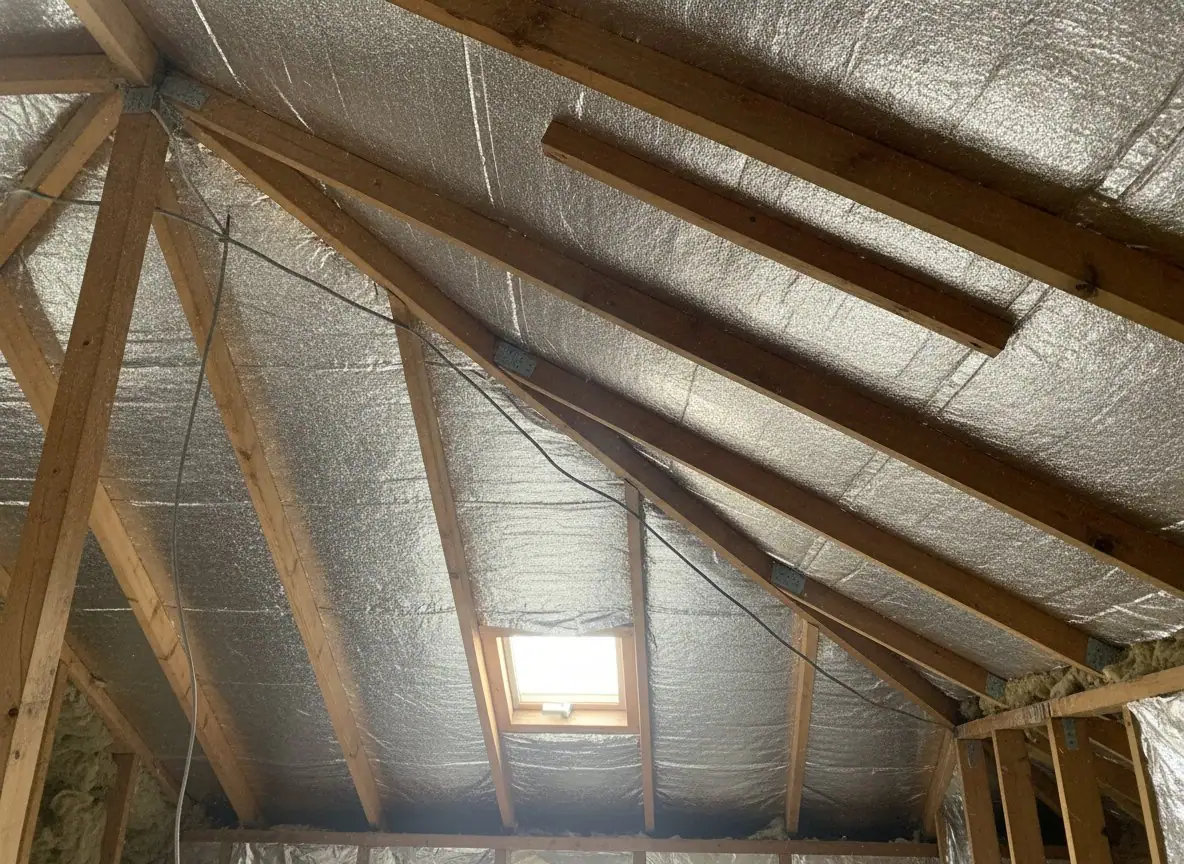
Applied directly to the underside of roof sheathing in an unvented attic assembly, open-cell foam at 5.5 to 7 inches thickness achieves R-20 to R-25 and brings the attic into conditioned space. This approach is highly effective in Irvine’s Portola Springs and Great Park Neighborhoods homes built after 2010 with complex rooflines and HVAC equipment located in the attic, where conditioning the attic space dramatically reduces system load.
Closed-Cell Spray Foam for Crawl Spaces and Rim Joists
Crawl space encapsulation using 2 to 3 inches of closed-cell foam on walls and rim joists is the recommended approach for Irvine homes built on pier-and-beam or raised foundations. This creates an unvented conditioned crawl space that eliminates ground moisture vapor transmission, a critical benefit given Irvine’s expansive clay soil profile.
Two-Component Spray Foam for Targeted Air Sealing
For older Irvine homes in Turtle Rock and University Park, targeted air sealing of attic bypasses, top plates, and penetrations using small-quantity two-component kits allows for precision sealing without full insulation replacement, often the most cost-effective starting point for homes with otherwise adequate insulation levels.
Closed-Cell Foam for Below-Grade and Exterior Applications
In Irvine homes with partial basements or below-grade mechanical rooms, closed-cell foam applied at 3 to 4 inches provides both insulation (R-18 to R-28) and a Class II vapor retarder, protecting against moisture migration through concrete block and poured concrete walls.
Flash-and-Batt Hybrid Systems
A thin 1-inch closed-cell foam flash coat applied to wall cavities followed by fiberglass batt fill combines the air sealing superiority of spray foam with the cost efficiency of batt insulation, an approach well-suited to wall retrofits in Irvine’s mid-century Northwood and Woodbridge neighborhood homes.
Spray Foam Insulation Cost in Irvine, CA: What to Expect
Spray foam insulation costs in Irvine reflect both the premium Southern California labor market and the specific product requirements dictated by Climate Zone 8 performance standards. The following price ranges reflect current 2024 market conditions in Orange County.
Open-Cell Spray Foam
- Material and labor: $1.00 to $1.50 per board foot (one square foot at one inch thickness)
- Typical attic application (1,500 sq ft at 5.5 inches): $8,250 to $12,375
Closed-Cell Spray Foam
- Material and labor: $1.75 to $3.00 per board foot
- Typical crawl space wall application (600 sq ft at 2 inches): $2,100 to $3,600
- Full rim joist sealing on a 2,000 sq ft Irvine home: $800 to $1,500
Project-Level Cost Ranges
- Targeted air sealing only: $500 to $1,500
- Attic insulation upgrade (open-cell, unvented assembly): $7,000 to $14,000
- Full crawl space encapsulation: $3,000 to $7,500
- Whole-home spray foam (walls, attic, crawl space): $15,000 to $30,000
Read moreShow less
Irvine-Specific Cost Factors
Orange County labor rates are 15% to 25% above the national average. HOA access restrictions in communities like Woodbridge and Quail Hill can add mobilization time. Attic insulation projects involving complex rooflines common in newer Irvine master-planned developments may require additional setup time. California’s SB 1 and IRA federal tax credits of up to $1,200 per year may offset a portion of qualifying insulation project costs.
Neighborhoods We Serve in Irvine
Woodbridge (Built 1970s–1990s)
One of Irvine’s earliest master-planned communities, Woodbridge homes frequently feature original fiberglass batt insulation that has compressed below effective R-values after 30 to 40 years of service. Spray foam retrofits in attic bypasses and crawl spaces are among the highest-impact upgrades available for this neighborhood’s housing stock.
Turtle Rock (Built 1970s–1980s)
Positioned on the elevated terrain near UC Irvine, Turtle Rock homes experience stronger coastal wind exposure than lower-elevation Irvine neighborhoods. Air infiltration rates in these homes are measurably higher, making comprehensive spray foam air sealing particularly cost-effective here.
Portola Springs and Great Park Neighborhoods (Built 2010–Present)
These newer communities feature modern construction but complex rooflines and HVAC-in-attic configurations that benefit significantly from unvented attic spray foam assemblies. Many homeowners here pursue spray foam to exceed baseline Title 24 performance and qualify for utility rebates from Southern California Edison’s Energy Efficiency Program.
Quail Hill and Shady Canyon (Built 2000s)
Premium hillside communities with high-end construction where closed-cell spray foam is frequently specified for both performance and indoor air quality benefits. We also serve Newport Beach and surrounding Orange County communities with the same level of expertise.
Spray Foam Insulation Maintenance Tips for Irvine Homeowners
- Annual Visual Inspection: Each fall before Santa Ana wind season (October through February), visually inspect accessible spray foam surfaces in your attic and crawl space for cracks, separation from substrates, or signs of pest intrusion.
- Monitor Crawl Space Humidity: Install a digital hygrometer in your crawl space and check readings monthly. Relative humidity above 60% in a spray-foam-sealed crawl space indicates a ground vapor or plumbing leak requiring investigation.
- Protect Foam from UV Exposure: Spray foam exposed to sunlight in exterior or semi-exposed applications degrades within 30 to 90 days without a protective coating. Ensure all exterior-facing foam is coated with an approved sealant.
- Avoid Mechanical Damage: When accessing attic spaces for HVAC maintenance, protect foam surfaces from foot traffic and tool damage, which can create air leakage pathways through the insulation layer.
- Check Penetrations After Seismic Activity: After any earthquake of Magnitude 4.0 or greater (Southern California averages several annually), inspect spray foam at structural penetrations for separation caused by building movement.
- Schedule Professional Re-inspection Every 5 Years: Have a qualified insulation contractor assess R-value performance and air sealing continuity every five years to maintain Title 24 compliance and peak energy performance.
- Address Pest Entry Points Promptly: Rodents can damage spray foam. If evidence of rodent activity is found, seal entry points and repair damaged foam immediately to prevent energy performance degradation.
Why Choose Home Energy Saver Insulation in Irvine
Home Energy Saver Insulation brings specialized expertise in Orange County’s unique climate, soil, and regulatory environment that general contractors simply cannot match. We work specifically within California’s Title 24 Climate Zone 8 requirements, ensuring every project we complete meets or exceeds the energy performance standards applicable to Irvine properties.
Our team understands the specific construction characteristics of Irvine’s master-planned communities, from the older wood-frame assemblies in Woodbridge and University Park to the complex modern rooflines of Portola Springs and the Great Park Neighborhoods. This local knowledge translates directly into accurate project scoping, appropriate product selection, and efficient installation that avoids costly mistakes.
Read moreShow less
We serve the full Orange County region, including Huntington Beach, Anaheim, Costa Mesa, Mission Viejo, and Laguna Beach, bringing the same depth of regional expertise to every project. Our team provides transparent, itemized estimates so Irvine homeowners fully understand what they are paying for and why. Contact us at (949) 710-2596 to schedule your assessment.
FAQ
Frequently Asked Questions About Spray Foam Insulation Cost in Irvine
How much does spray foam insulation cost per square foot in Irvine?
In Irvine, open-cell spray foam typically costs $1.00 to $1.50 per board foot installed, while closed-cell foam ranges from $1.75 to $3.00 per board foot installed. Board feet measure one square foot of coverage at one inch of thickness, so a 2,000 square foot attic treated with 6 inches of open-cell foam equals 12,000 board feet, placing the project cost between $12,000 and $18,000 before any applicable rebates or tax credits.
Is spray foam insulation worth the cost in Irvine’s climate?
For most Irvine homeowners, spray foam delivers a payback period of 5 to 9 years through reduced electricity costs, given Orange County’s electricity rates of 28 to 32 cents per kilowatt-hour. Homes in high-exposure areas like Turtle Rock and Portola Springs, subject to strong Santa Ana wind infiltration, often see even faster payback periods of 4 to 6 years.
Does Irvine require permits for spray foam insulation installation?
The City of Irvine requires building permits for insulation projects that alter the thermal envelope of a structure, including unvented attic conversions and crawl space encapsulation. We handle permit applications and ensure all work complies with California’s Title 24 Climate Zone 8 requirements and the 2022 California Building Code.
How long does a spray foam insulation project take in Irvine?
Most residential spray foam projects in Irvine are completed within one to two days. A targeted attic air sealing project may take as little as 4 to 6 hours. A full crawl space encapsulation typically requires 6 to 8 hours. Whole-home projects covering attic, walls, and crawl space generally span two full days.
Can spray foam insulation help with Irvine’s marine layer humidity problems?
Yes. Closed-cell spray foam acts as a Class II vapor retarder, directly addressing moisture intrusion from Irvine’s marine layer conditions. In crawl spaces and below-grade applications particularly, closed-cell foam prevents the vapor transmission that leads to elevated wood moisture content and mold growth, both of which are documented concerns in Irvine’s coastal-adjacent neighborhoods.
Are there rebates available for spray foam insulation in Irvine?
Irvine residents served by Southern California Edison may qualify for rebates through SCE’s Home Energy Efficiency Rebate Program. Additionally, the federal Inflation Reduction Act’s 25C tax credit provides up to $1,200 annually for qualifying insulation improvements, and the 25D credit applies to certain whole-home energy efficiency projects. We provide all required documentation to support your rebate and tax credit applications.
What is the difference between open-cell and closed-cell foam for Irvine homes?
Open-cell foam is softer, more affordable, and vapor-permeable, making it ideal for interior attic roof deck applications where maximum R-value per dollar is the priority. Closed-cell foam is denser, provides higher R-value per inch (R-6 to R-7), and acts as a vapor barrier, making it the correct choice for crawl spaces, rim joists, and any application in Irvine where moisture resistance is equally important as thermal performance.
How does spray foam insulation compare to blow-in insulation for Irvine attics?
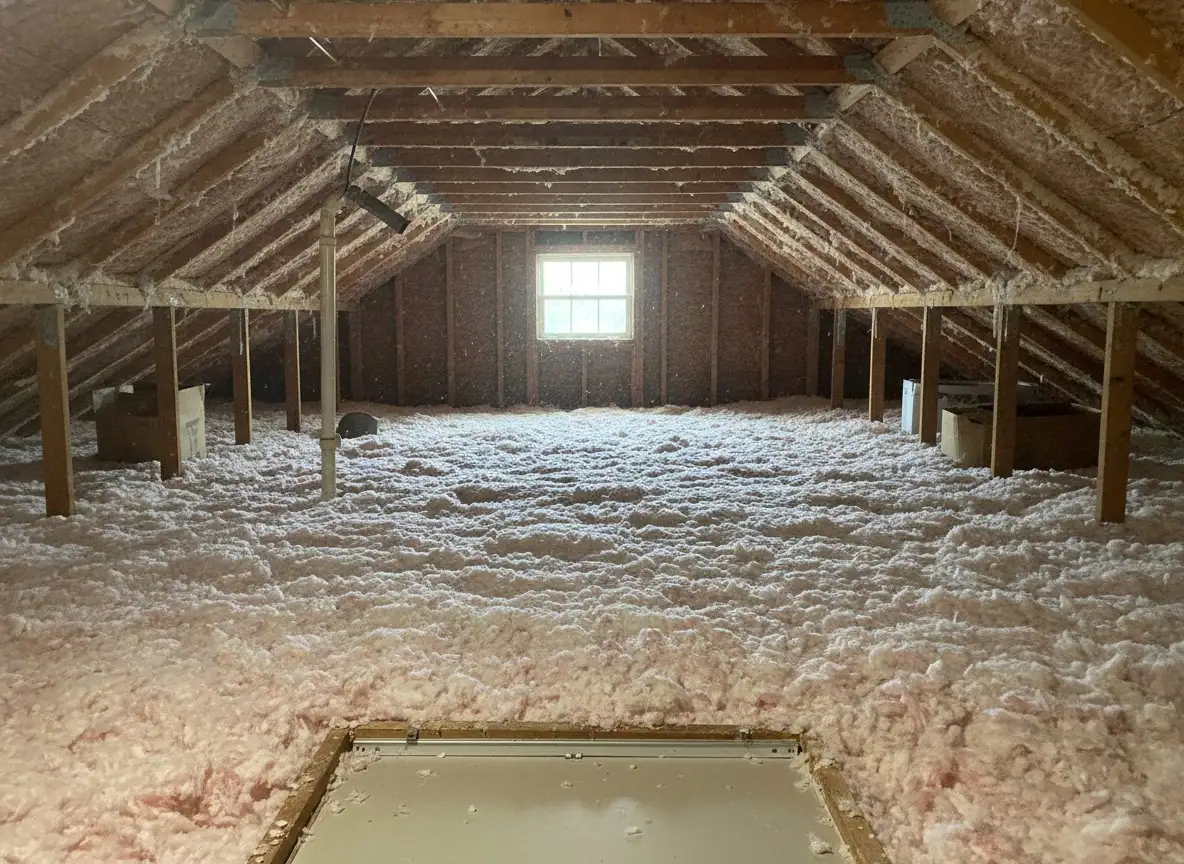
Blow-in insulation is a lower-cost option that improves thermal resistance in attic floor applications. However, it does not provide air sealing and cannot address the attic bypass leakage that drives a significant portion of Irvine homes’ energy losses. Spray foam, while more expensive, simultaneously air seals and insulates, delivering superior performance particularly in older Irvine homes where air leakage is the primary energy performance issue.
Get Your Spray Foam Insulation Cost Estimate in Irvine Today
Ready to find out exactly what spray foam insulation will cost for your Irvine home and how much you could save on your Southern California Edison bills? Home Energy Saver Insulation provides detailed, no-obligation estimates specific to your property, your neighborhood’s construction characteristics, and Irvine’s Title 24 Climate Zone 8 requirements.
Our team serves all of Irvine and Orange County, including Woodbridge, Turtle Rock, Portola Springs, Shady Canyon, the Great Park Neighborhoods, and every community in between. We also provide insulation removal, spray foam insulation, and crawl space insulation services throughout the region.
Call us now at (949) 710-2596 to schedule your on-site assessment and receive a transparent, itemized cost estimate within 24 to 48 hours. Energy savings for your Irvine home start with one call.
Get in touch
Find insulation help near you
Request a free estimate online or give us a call — our team will follow up quickly.
- Call us(949) 710-2596
- Visit22 Thomas, Irvine, CA 92618
- HoursMon-Sun 07:00-19:00