

Open Cell Spray Foam Insulation in Irvine, CA
Energy-Saving Open Cell Spray Foam Insulation for Irvine, CA Homes — Licensed & Insured
Get expert open cell spray foam insulation in Irvine, CA. Home Energy Saver Insulation serves all Irvine villages. Call (949) 710-2596 for a free estimate.
Open cell spray foam insulation is a cutting-edge, water-blown insulation material that expands on contact to fill cavities, gaps, and hard-to-reach spaces with a soft, spongy foam matrix. Unlike traditional batts or blown-in fiberglass, open cell spray foam creates a continuous air barrier that dramatically reduces energy loss through walls, ceilings, and attic spaces.
In Irvine, CA, where Mediterranean climate conditions bring warm, dry summers frequently exceeding 90°F and mild but humid coastal winters influenced by the Pacific Ocean and Santa Ana Canyon wind corridors, proper insulation is not optional — it is essential. The city’s rapid master-planned growth means homes of varying ages and construction types coexist, each with unique insulation demands.
Read moreShow less
At Home Energy Saver Insulation, we specialize in delivering open cell spray foam solutions precisely calibrated for Irvine’s microclimates, building codes, and architectural styles. Whether you own a newer village-planned residence in Woodbury or an older tract home in University Park, our team brings hands-on expertise across the full Orange County region. Call us at (949) 710-2596 to schedule your free assessment today.
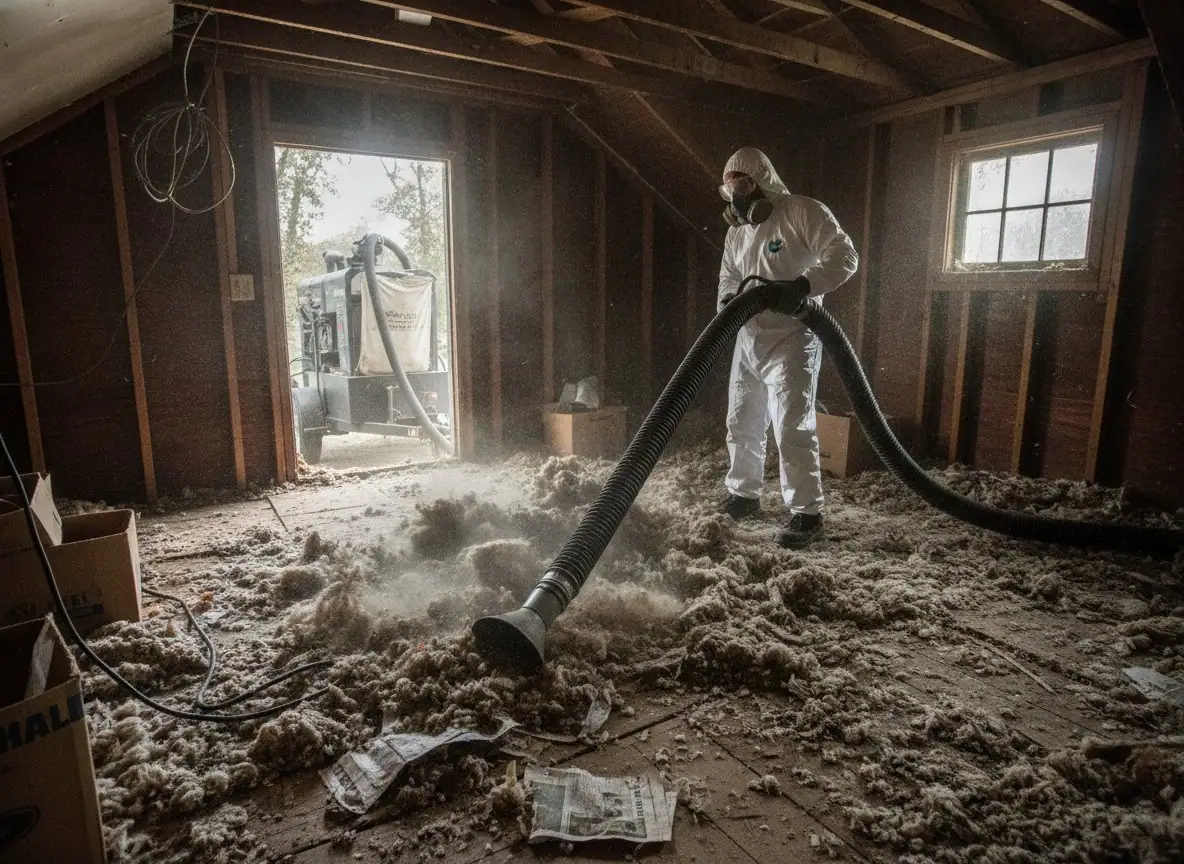
Understanding Open Cell Spray Foam Insulation
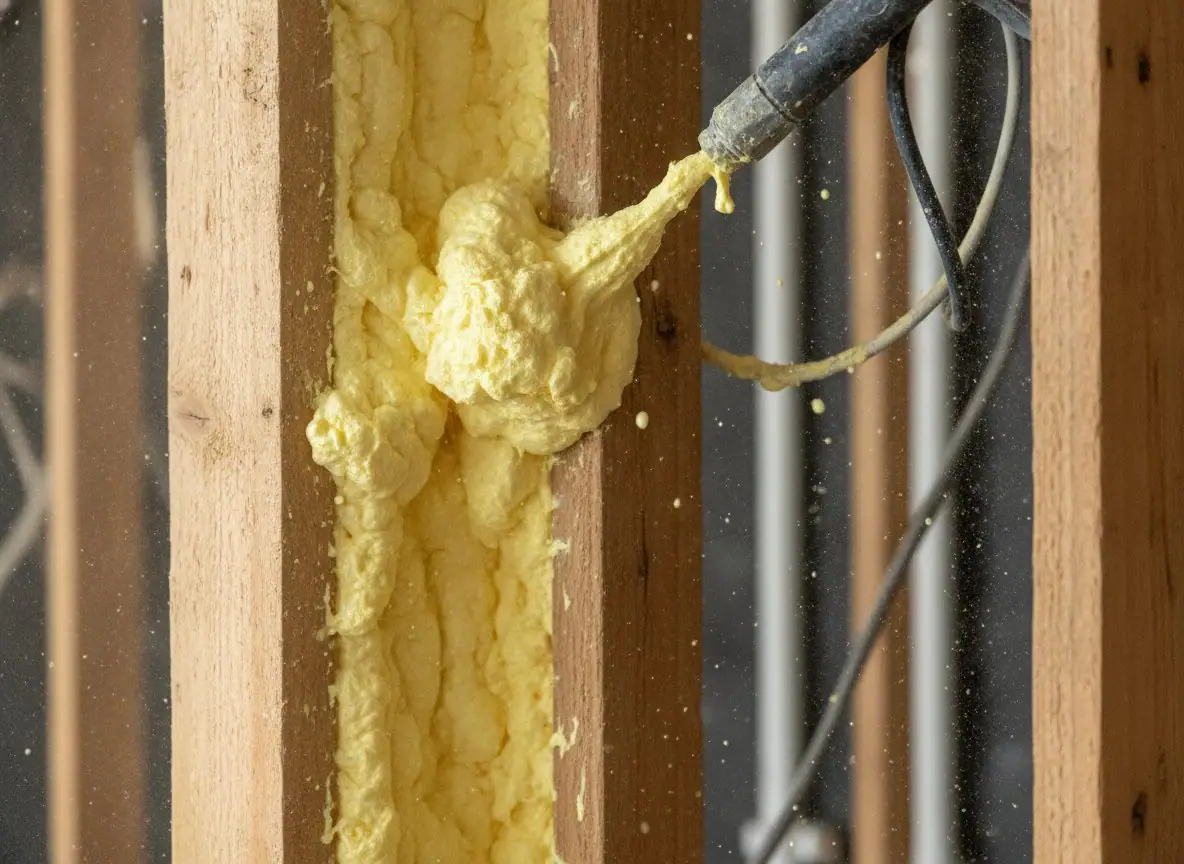
Open cell spray foam insulation is a two-component polyurethane system. When the two liquid components — isocyanate and polyol resin — are mixed at the spray tip, a rapid chemical reaction causes the material to expand up to 100 times its original volume within seconds. The resulting foam is soft, flexible, and filled with tiny open cells, giving it a spongy texture distinct from the rigid, dense character of closed cell foam.
The open cell structure means the foam is vapor-permeable, allowing moisture to pass through rather than becoming trapped. This characteristic is particularly valuable in Southern California climates where vapor management must be carefully balanced against air sealing requirements. The material typically achieves an R-value of approximately R-3.5 to R-3.8 per inch, making it ideal for thicker cavity applications where the goal is comprehensive air sealing alongside moderate thermal resistance.
Read moreShow less
Historically, spray foam insulation became commercially viable in the 1970s and gained widespread residential adoption through the 1990s as energy efficiency standards tightened across California. The state’s Title 24 Building Energy Efficiency Standards, first adopted in 1978 and updated regularly through the current 2022 code cycle, have consistently pushed Irvine builders and homeowners toward higher-performance insulation solutions. Open cell spray foam became particularly popular in Orange County during the post-2000 building boom as Irvine’s planned communities — designed by the Irvine Company — prioritized energy-efficient construction to meet both state mandates and buyer expectations.
Open cell spray foam is commonly used in residential wall cavities, attic rafters and sheathing, crawl spaces, rim joists, and interior partition walls for sound dampening. It is well-suited to Irvine’s mix of single-family detached homes, attached townhomes, and two-story condominiums found across villages like Northwood, Quail Hill, and Portola Springs. The foam’s flexibility also allows it to accommodate the minor structural movement common in Southern California’s seismically active environment without cracking or separating from framing members.
For homeowners exploring spray foam insulation options, open cell foam represents one of the most cost-effective and acoustically superior choices available in the current market.
Why Open Cell Spray Foam Insulation Is Needed in Irvine, CA
Santa Ana Wind Events and Air Infiltration
Irvine sits directly in the path of Santa Ana wind corridors that funnel through the Cajon Pass and the Santa Ana Canyon, which lies just northeast of the city. During peak Santa Ana events — such as the October 2007 fires that prompted widespread evacuations across Orange County or the December 2017 wind event that produced gusts exceeding 60 mph across the Irvine area — pressure differentials across building envelopes can force substantial volumes of outdoor air through even small gaps in traditional insulation systems. A typical 2,000-square-foot home can lose up to 30% of its heated or cooled air through unaddressed infiltration points. Open cell spray foam’s ability to seal these micro-gaps continuously across wall and attic cavities makes it uniquely effective against this recurring local wind-driven infiltration challenge.
Marine Layer and Coastal Humidity
Irvine’s location approximately 10 miles from the Pacific Ocean coastline means the city experiences regular marine layer intrusions, particularly from May through July — the phenomenon locally known as “June Gloom.” Morning relative humidity levels during these months routinely reach 75% to 90% in western Irvine neighborhoods like Oak Creek and Westpark, which border the 405 Freeway corridor and receive direct marine air flow. Without proper air sealing, this moisture infiltrates wall cavities and attic spaces, feeding mold growth on wood framing and degrading fiberglass batt performance by up to 40% when batts become even slightly damp.
Urban Heat Island Effect Along Major Corridors
Irvine’s extensive commercial and retail development along the Irvine Spectrum, the Jamboree Road corridor, and the University Research Park contributes to localized urban heat island effects. Surface temperatures on paved areas surrounding residential villages like Woodbury East and Cypress Village can exceed ambient air temperatures by 10°F to 15°F during summer afternoons. Attic temperatures in homes adjacent to these commercial zones can reach 150°F to 160°F in July and August, creating enormous thermal loads that overwhelm standard R-19 fiberglass attic insulation. Open cell spray foam applied to the attic roof deck brings these spaces into conditioned thermal boundaries and can reduce attic temperatures by 30°F to 40°F.
Seismic Activity and Settlement Gaps
Irvine sits in proximity to the Elsinore Fault Zone to the southeast and the Newport-Inglewood Fault to the west. Minor seismic events — including the 5.1 magnitude La Habra earthquake in March 2014, felt strongly across Irvine — cause micro-settling in residential foundations and framing over time. These shifts open hairline gaps between framing members and sheathing that rigid insulation products cannot bridge. Open cell spray foam’s flexibility allows it to maintain adhesion and air-sealing continuity through these minor structural movements, ensuring long-term performance that rigid board or batt alternatives cannot sustain.
Title 24 Compliance in Older Irvine Neighborhoods
Older Irvine villages including University Park (developed primarily from 1971 through the mid-1980s) and Turtle Rock (developed largely through the 1970s and 1980s) contain homes built to significantly lower insulation standards than today’s Title 24 requirements. Many of these homes carry wall cavity insulation values as low as R-11, far below the R-21 minimum now required in California Climate Zone 10, which covers Irvine. Retrofitting these homes with open cell spray foam is one of the most efficient paths to code compliance and meaningful energy savings. Insulation removal and replacement services are frequently the first step in this upgrade process.
Free, no-obligation estimates
Talk to Home Energy Saver Insulation
Tell us what you need and we’ll take it from there.
Signs You Need Open Cell Spray Foam Insulation in Irvine
Energy and Comfort Indicators
- Monthly electricity bills exceeding $250 to $350 during Irvine’s July and August peak cooling months despite standard thermostat settings
- Rooms that remain noticeably warmer or cooler than the thermostat setting, particularly second-floor rooms in two-story homes
- HVAC system cycling more than once every 15 minutes during afternoon heat peaks
- Drafts near electrical outlets, recessed light fixtures, or along baseboards during Santa Ana wind events
Moisture and Air Quality Indicators
- Visible condensation on interior walls or window frames during winter mornings following heavy marine layer nights
- Musty or stale odors concentrated in rooms above the garage or adjacent to exterior walls
- Increased dust accumulation despite regular cleaning, indicating unfiltered outdoor air infiltration
- Worsening allergy or asthma symptoms, particularly during high-pollen spring months when Santa Ana winds carry inland particulates
Structural and Visual Indicators
- Visible gaps or deteriorated existing insulation observed during attic inspection
- Water staining on attic sheathing or framing suggesting past moisture intrusion
- Sagging, discolored, or displaced fiberglass batts in attic or crawl space areas
- Pest intrusion through wall gaps — a common issue in Irvine’s Northwood and Woodbridge neighborhoods where aging wood-frame construction interfaces with mature landscaping
If you recognize two or more of these signs, contact Home Energy Saver Insulation at (949) 710-2596 for an immediate assessment. Delaying insulation upgrades in Irvine’s climate typically costs homeowners $80 to $150 per month in unnecessary energy expenditure.
Our process
Our Open Cell Spray Foam Insulation Process in Irvine
Home Energy Saver Insulation follows a structured, transparent process for every Irvine project, ensuring quality results and minimal disruption to your household.
- 01
Free On-Site Assessment (1–2 Hours)
Our technician visits your Irvine property to evaluate existing insulation levels, identify air infiltration points, measure cavity depths, and assess any moisture or pest damage. We use thermal imaging cameras to locate hidden thermal bridges and infiltration
- 02
Scope Development and Proposal (24–48 Hours)
We prepare a detailed written proposal identifying targeted application areas, expected R-values, foam depths, and projected energy savings. For Irvine projects, we confirm compliance with California Title 24 requirements for Climate Zone 10 and note any HOA d
- 03
Pre-Installation Preparation (2–4 Hours on Project Day)
Work areas are masked and protected. Furniture, flooring, and HVAC intakes are covered. Our team verifies that attic or crawl space access is clear and that ambient temperature conditions fall within the 60°F–90°F range optimal for open cell foam cure — critic
- 04
Spray Foam Application (4–8 Hours Depending on Scope)
Using professional-grade proportioning equipment, our certified applicators spray open cell foam in controlled lifts to achieve specified depths. Attic deck applications in Irvine homes typically target 6 to 8 inches of open cell foam to achieve R-20 to R-25 v
- 05
Cure Period (1–4 Hours Before Re-Occupancy)
Open cell foam achieves tack-free cure within 30 to 60 minutes. We recommend a minimum 1-hour vacancy period for the application area, with full off-gassing complete within 24 hours. Ventilation protocols follow California Air Resources Board guidelines for lo
- 06
Inspection and Quality Verification (1 Hour)
A senior technician inspects all application areas, verifies foam depth with calibrated probes, and confirms complete coverage without voids or thin spots. Thermal imaging may be used to confirm air sealing effectiveness.
- 07
Cleanup and Documentation
All masking materials are removed and work areas are cleaned. You receive a completed project report including foam depths, R-values achieved, and any recommendations for supplemental attic insulation or crawl space insulation work.
Open Cell Spray Foam Methods and Approaches
Attic Roof Deck (Unvented Attic) Application
Spraying open cell foam directly to the underside of roof sheathing and rafters creates an unvented conditioned attic space. This method is ideal for Irvine homes with HVAC equipment or ductwork located in the attic — a common configuration in Irvine Company-built homes across Northwood, Stonegate, and Portola Springs. Bringing ductwork into conditioned space reduces HVAC efficiency losses from duct leakage by up to 25%.
Wall Cavity Retrofit Injection
For existing homes in University Park, Turtle Rock, and Woodbridge where walls were originally insulated with R-11 fiberglass batts or left partially empty, small injection holes are drilled through exterior stucco or interior drywall and open cell foam is injected to fill cavities completely. This minimally invasive approach avoids full drywall removal while dramatically improving thermal and air performance.
Crawl Space and Rim Joist Application
Open cell foam applied to crawl space walls and rim joists seals the critical gap between the foundation and first floor framing. This is particularly effective for Irvine homes in older neighborhoods where pier-and-beam or raised foundation systems allow cold, damp air from concrete-adjacent soil to enter living areas. Crawl space encapsulation is often paired with this application.
Interior Sound Dampening Application
Open cell foam’s open-cell matrix provides superior sound transmission reduction compared to fiberglass batts. In Irvine’s higher-density attached townhomes and condominiums — common in communities like Central Park West and Irvine’s many mixed-use village centers — open cell foam in shared wall cavities significantly reduces noise transfer between units.
New Construction Rough-In Application
During new construction, open cell foam is applied to wall framing and attic structures before drywall installation, providing complete cavity fill and air sealing from day one. This approach ensures compliance with California’s 2022 Title 24 energy code air leakage requirements and supports LEED or ENERGY STAR certification for qualifying Irvine projects.
Open Cell Spray Foam Insulation Cost in Irvine, CA
Understanding the investment involved in open cell spray foam insulation helps Irvine homeowners plan effectively. Pricing in the Irvine market reflects both material costs and the skilled labor required for professional application.
Typical Cost Ranges
- Attic roof deck application: $1.50 to $2.50 per board foot (one square foot, one inch thick), with a typical 2,000-square-foot attic at 6-inch depth costing $3,500 to $6,000 installed
- Wall cavity retrofit injection: $2.00 to $3.50 per square foot of wall area, with a full home wall retrofit on a 2,000-square-foot house ranging from $4,000 to $8,000 depending on existing insulation removal needs
- Crawl space and rim joist application: $1,500 to $3,500 for a typical Irvine single-family home depending on crawl space size and accessibility
- Interior partition sound dampening: $1.00 to $2.00 per square foot for interior wall cavities
Read moreShow less
Irvine-Specific Cost Factors
Several factors influence open cell spray foam pricing specifically in the Irvine market. Orange County labor costs are generally 15% to 25% higher than California’s Central Valley or Inland Empire regions due to higher prevailing wages and contractor overhead. HOA permit coordination, required in communities like Shady Canyon and Turtle Rock, can add $200 to $500 in administrative time. Homes with complex rooflines — common in Irvine’s newer architectural styles — require additional setup and masking time.
Return on Investment
Irvine homeowners typically see payback periods of 4 to 7 years on open cell spray foam investments through reduced SCE (Southern California Edison) electricity costs, which average $0.28 to $0.34 per kWh in the current rate tier. California utility rebates through the Energy Upgrade California program may reduce project costs by $500 to $1,500 for qualifying installations. Contact us at (949) 710-2596 for a detailed cost estimate tailored to your specific Irvine property.
Irvine Neighborhoods We Serve
University Park
Developed primarily from 1971 through the mid-1980s, University Park contains a high concentration of original wood-frame homes with outdated R-11 wall insulation and uninsulated or poorly insulated attic spaces. Many properties here are undergoing insulation replacement as owners modernize aging systems. Insulation replacement combined with open cell spray foam is a common upgrade pathway in this village.
Woodbridge
Woodbridge’s lakeside community, built largely through the 1980s and early 1990s, features both single-family and attached condominium-style homes. The proximity to Woodbridge’s two man-made lakes creates localized humidity pockets that accelerate degradation of fiberglass batt insulation. Open cell foam’s moisture management properties are particularly well-suited to this microclimate.
Portola Springs and Woodbury East
These newer master-planned villages, developed from the early 2000s through the present, contain homes built to higher original energy standards but often with ductwork located in unconditioned attic spaces. Converting to unvented attic configurations with open cell spray foam brings significant HVAC efficiency gains for these relatively newer homes.
Northwood
Northwood encompasses homes from multiple development eras ranging from the 1970s through early 2000s. The diversity of construction types — from wood-frame single-stories to larger two-story stucco homes — means insulation needs vary significantly by street and block. Our area-specific assessments account for this variability.
Maintenance Tips for Open Cell Spray Foam Insulation in Irvine
- Annual visual inspection: Check accessible spray foam surfaces in attics and crawl spaces each fall before Santa Ana wind season begins in October and November. Look for any areas showing compression, discoloration, or separation from framing.
- Monitor for pest activity: Open cell foam, while not a food source, can be tunneled by rodents common in Irvine’s interface with natural open space preserves. Inspect foam perimeters near foundation penetrations annually.
- Maintain attic ventilation pathways: In hybrid insulation systems where spray foam coexists with blown-in materials, ensure soffit vents remain unobstructed, particularly after leaf fall from Irvine’s mature street tree canopy.
- Check HVAC duct connections: After any seismic activity — even minor events — inspect duct connections within spray-foamed attic spaces to confirm seals remain intact.
- Control interior humidity: Use bathroom and kitchen exhaust fans consistently during Irvine’s June Gloom marine layer season to prevent interior humidity from reaching the dew point in cooler wall cavities.
- Avoid penetrating foam surfaces: When adding recessed lights, cable runs, or other attic penetrations, reseal any cuts through spray foam with compatible sealant to maintain air barrier continuity.
- Schedule professional reassessment every 5–7 years: As homes settle and building codes evolve through California’s Title 24 update cycles, periodic professional evaluation ensures your insulation system remains optimized.
Why Choose Home Energy Saver Insulation in Irvine
Home Energy Saver Insulation is a locally focused insulation company serving Irvine and the broader Orange County region. Our team understands the specific building stock, neighborhood histories, climate microclimates, and HOA requirements that define insulation work across Irvine’s planned communities — knowledge that out-of-area contractors simply cannot replicate.
We are deeply familiar with California Title 24 Climate Zone 10 requirements, which govern all insulation work in Irvine, and we stay current with each successive code update to ensure every installation meets or exceeds compliance standards. Our applicators are trained in professional spray foam handling and safety protocols consistent with the Spray Polyurethane Foam Alliance (SPFA) industry standards.
Read moreShow less
We offer comprehensive insulation services beyond open cell spray foam, including blow-in insulation, insulation removal, and crawl space encapsulation, allowing us to serve as a single trusted partner for all of your home’s insulation needs. We serve homeowners throughout Irvine’s villages as well as surrounding Orange County communities.
Call us at (949) 710-2596 to speak with an Irvine insulation specialist and schedule your free assessment.

FAQ
Frequently Asked Questions: Open Cell Spray Foam Insulation in Irvine, CA
How much does open cell spray foam insulation cost in Irvine?
In the Irvine market, open cell spray foam typically costs between $1.50 and $3.50 per board foot installed, depending on application type, thickness required, and project scope. A full attic roof deck application for a 2,000-square-foot Irvine home generally ranges from $3,500 to $6,000. Orange County labor rates and any required HOA permit coordination can affect final pricing. Contact us at (949) 710-2596 for a free, detailed estimate for your specific property.
Is open cell or closed cell spray foam better for Irvine homes?
Both types have appropriate applications in Irvine. Open cell foam is generally the preferred choice for attic roof deck applications, interior wall cavities, and sound dampening due to its vapor permeability, flexibility during seismic events, and lower cost per inch. Closed cell foam is better suited for below-grade applications, areas with high moisture exposure, or situations requiring maximum R-value in thin spaces. Our technicians assess each location-specific situation and recommend the most appropriate product.
How long does open cell spray foam installation take for an Irvine home?
A typical Irvine single-family home attic application takes one full day — approximately 6 to 8 hours including preparation, application, cure time, and inspection. Larger projects or whole-home retrofits combining wall cavities and attic work may require two to three days. Most homeowners can re-occupy treated spaces within 1 to 4 hours after application is complete.
Does open cell spray foam meet California Title 24 requirements?
Yes. Open cell spray foam installed to appropriate depths meets California Title 24 requirements for Climate Zone 10, which covers Irvine. Attic applications at 6 inches achieve approximately R-20 to R-21, meeting current minimum standards. We document all installations with product data sheets and depth measurements for your records and any required permit inspections.
Will my Irvine HOA require permits for spray foam insulation work?
Most open cell spray foam installation work in existing Irvine homes is classified as a re-roofing or re-insulating activity and may not require a city building permit. However, certain Irvine HOAs — particularly in communities like Shady Canyon, Quail Hill, and Turtle Rock — have architectural review requirements for exterior modifications. We help homeowners navigate HOA documentation requirements as part of our standard project scoping process.
How does open cell spray foam handle Irvine’s Santa Ana wind events?
Open cell spray foam creates a continuous, seamless air barrier that is far more resistant to wind-driven infiltration than fiberglass batts or loose-fill insulation. During Santa Ana events with gusts exceeding 50 to 60 mph — which Irvine experiences several times each fall and winter — pressure differentials can drive significant air volumes through gaps in traditional insulation systems. Spray foam’s adhesive bond to framing and sheathing eliminates these infiltration pathways, maintaining conditioned air inside your home regardless of exterior wind conditions.
Can open cell spray foam be installed in Irvine homes with existing insulation?
In many cases, yes. For attic roof deck applications converting to an unvented attic configuration, existing attic floor insulation can often remain in place, supplemented by the new roof deck application. For wall cavity retrofits in older University Park or Turtle Rock homes, existing degraded fiberglass batts typically need to be removed first. Our assessment process evaluates existing conditions and recommends the most cost-effective approach for your specific home.
Does open cell spray foam help with noise reduction in Irvine?
Yes, significantly. Open cell foam provides substantially better sound transmission reduction than fiberglass batts in equivalent cavity depths. In Irvine, where many attached townhomes, condominiums, and homes adjacent to major arterials like Culver Drive, Jeffrey Road, or the 5 and 405 freeway corridors experience significant noise infiltration, open cell spray foam in wall and ceiling cavities can reduce perceived noise levels by 50% to 70% compared to uninsulated or batt-insulated assemblies.
Get Your Free Open Cell Spray Foam Estimate in Irvine Today
Ready to reduce your energy bills, improve indoor comfort, and protect your Irvine home from the demands of Southern California’s climate? Home Energy Saver Insulation is ready to help. Our Irvine insulation specialists are available to conduct a thorough on-site assessment, identify your home’s specific vulnerabilities, and provide a transparent, no-obligation written estimate.
We serve all of Irvine’s villages — from University Park and Woodbridge to Portola Springs and Stonegate — as well as communities throughout Orange County including Newport Beach, Mission Viejo, Huntington Beach, and Anaheim.
Call us now at (949) 710-2596 to schedule your free assessment. Our team responds promptly to all Irvine and Orange County service inquiries. Don’t let another high-energy month pass without taking action — contact Home Energy Saver Insulation today and start saving.
Get in touch
Find insulation help near you
Request a free estimate online or give us a call — our team will follow up quickly.
- Call us(949) 710-2596
- Visit22 Thomas, Irvine, CA 92618
- HoursMon-Sun 07:00-19:00